







<back
Compact Bayonet Plug and Socket: How Tail Attachments Simplify Cable Routing in Industrial Panels
Industrial control panels often contain multiple electrical connections within a limited installation space. Therefore, connector structure plays an important role in organizing cables and maintaining convenient access during equipment assembly and maintenance. A compact bayonet plug and socket provides a practical connection option for DC and AC circuits, combining a bayonet coupling mechanism with a compact configuration. In particular, a straight plastic tail attachment on the socket can help guide connected cables toward a more organized routing path.
How Does a Bayonet Connection Work?
A bayonet connection uses a mechanical locking structure to connect a plug and socket through a simple mating operation. Instead of relying on multiple screw turns, users align the connector components and engage the locking mechanism to establish the connection. This design makes mating and unmating more convenient, especially when technicians need to access electrical connections during equipment installation or routine maintenance. As a result, a bayonet-style plug and socket connector can support applications where connection speed and practical operation both matter.
For industrial equipment, a reliable locking structure also helps maintain the connection during normal operation. However, the connector must be selected according to the electrical requirements and installation conditions of the target equipment. A quick-release connector can be particularly useful when equipment requires regular inspection, replacement, or disconnection. By combining a straightforward locking operation with an appropriate housing configuration, this connector structure supports more efficient electrical assembly.
Why Does a Straight Plastic Tail Attachment Matter?
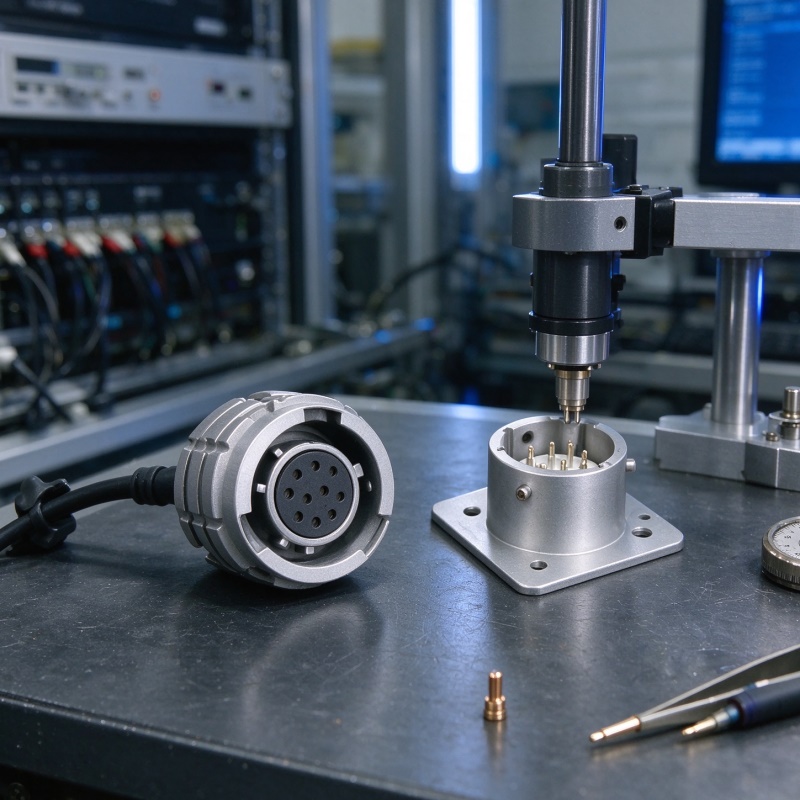
Cable routing becomes more challenging when industrial panels contain several electrical components, limited wiring space, and multiple connection points. In this product configuration, the socket features a straight plastic tail attachment, while the plug does not include a tail attachment. This structural difference gives the socket a defined rear connection direction, which can help installers arrange the connected cable along the intended wiring path. Consequently, a compact bayonet plug and socket can contribute to a cleaner connection layout when its tail direction matches the panel design.
Moreover, a straight tail attachment can make cable positioning easier during assembly. Installers can consider the socket orientation, cable exit direction, and available clearance before fixing the connector into the equipment. This approach helps reduce unnecessary cable bending and makes it easier to plan the space around adjacent components. Although the actual routing result depends on the panel layout and cable specifications, the tail structure provides a useful installation feature for organized wiring.
Supporting Space-Efficient Industrial Panel Design
Industrial control cabinets often need to accommodate power connections, control circuits, signal wiring, and other electrical components in a restricted area. Therefore, connector dimensions and cable exit direction can influence the overall arrangement of the internal wiring. A compact high-density connector is useful in applications where equipment designers need to manage multiple connection points without occupying excessive panel space. When the connector structure matches the installation requirements, it can help maintain a more accessible and organized wiring layout.
In addition, a connector for control cabinets should be evaluated according to its electrical ratings, mounting arrangement, contact configuration, and operating environment. The OHS model uses a bayonet connection and is designed for DC and AC circuits. Its plug and socket configuration provides a practical option for equipment that requires a detachable electrical connection. Before installation, however, users should confirm that the connector's electrical and mechanical specifications match the requirements of the intended system.
Where Can This Connector Configuration Be Used?
Bayonet-style electrical connectors can be considered for industrial equipment, control panels, and other electrical assemblies that require detachable connections. Their locking structure supports convenient connection and disconnection, while the socket's straight plastic tail attachment offers an additional option for cable arrangement. For example, equipment designers may consider this configuration when planning internal wiring paths or positioning connectors near other panel components. Nevertheless, the final choice should depend on the available installation space, cable direction, and electrical compatibility.
For projects with specific layout requirements, it is also important to review the connector's physical configuration before production or assembly. A compact bayonet plug and socket can be a suitable choice when the application benefits from a bayonet locking method and a socket with a straight tail attachment. Airoadcon provides connector options for customers evaluating electrical connection structures for industrial applications. Checking the model details and installation requirements in advance can help ensure that the selected connector fits the intended equipment.
Choosing the Right Connector for Your Application
Selecting an electrical connector involves more than checking whether its plug and socket can be connected. Buyers and equipment engineers should also consider circuit type, mating requirements, cable exit direction, panel clearance, and the conditions in which the connector will operate. In particular, the difference between a plug without a tail attachment and a socket with a straight plastic tail attachment should be considered during cable planning. This helps prevent installation conflicts and supports a more practical wiring arrangement.
Ultimately, connector structure can influence both assembly convenience and the organization of industrial panel wiring. The bayonet coupling provides a straightforward locking method, while the straight plastic tail on the socket offers a defined direction for cable connection. By evaluating these features alongside electrical compatibility and installation space, engineers can select a suitable connector configuration for their equipment. This makes the OHS model a practical option to consider for DC and AC connection applications where detachable mating and organized cable routing are important.