







<back
IP67 High-Current Automotive Connector: How to Ensure Safe EV Power Transmission
Electric vehicles rely on dependable electrical connections to transfer power between battery systems and other high-current components. However, moisture, vibration, and incorrect mating can create challenges for connectors operating inside vehicles. An IP67 high-current automotive connector helps address these concerns by combining environmental protection with high-current transmission capabilities. Therefore, selecting a suitable connector requires careful consideration of current capacity, cable compatibility, sealing performance, and mechanical design.
Why IP67 Protection Matters in Electric Vehicles
Electric vehicles may encounter damp conditions during daily operation, particularly around areas exposed to rainwater, road spray, and changing temperatures. An IP67-rated connector is designed to prevent dust ingress and withstand temporary immersion under specified test conditions when correctly assembled. Nevertheless, this rating does not mean that a connector can remain submerged indefinitely or operate safely under every environmental condition. For this reason, engineers should evaluate sealing components, installation methods, and the intended operating environment before integrating connectors into an EV power system.
Supporting High-Current Power Transmission
High-current circuits require connectors that can carry electrical loads while controlling contact resistance and heat generation. The Airoadcon QHK01 series is designed for high-current transmission in electric vehicle main circuits, with different configurations to accommodate varying cable and current requirements. The B series has a rated current of 200A and is specified for 50 mm² wire, while the C series has a rated current of 300A and is specified for 70 mm² shielded wire. Since actual current capacity depends on operating temperature, conductor properties, installation conditions, and other factors, engineers should confirm the manufacturer's specifications before finalizing a design.
Key Design Features of the QHK01 Connector Series
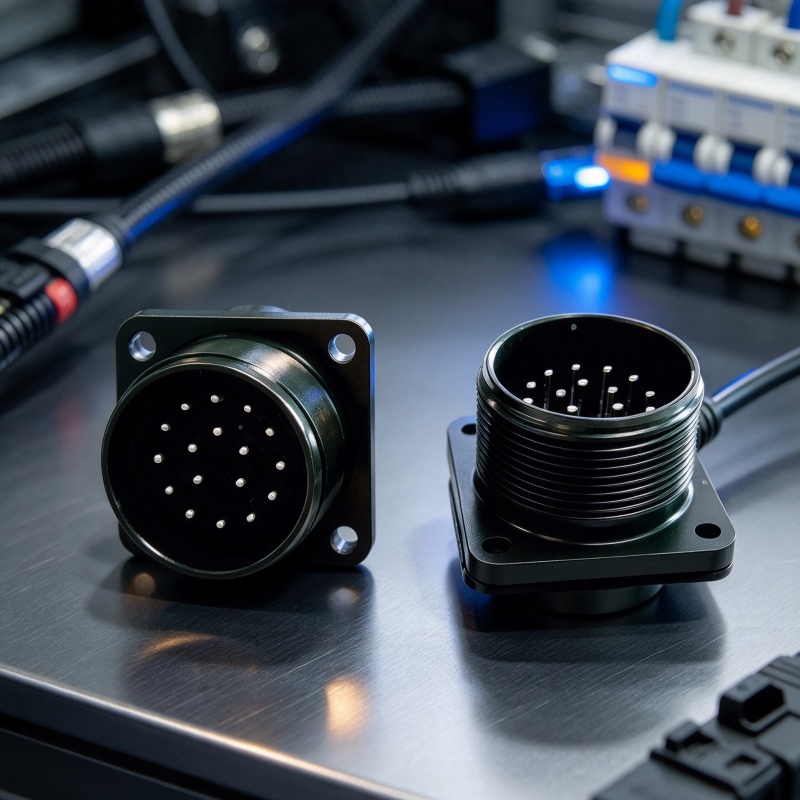
An IP67 high-current automotive connector needs more than an appropriate current rating to perform reliably in demanding vehicle environments. The QHK01 series features three key-position configurations designed to help prevent incorrect mating, while its crimped wire termination supports a secure electrical connection when properly assembled. The socket connects to busbars through a threaded connection, providing a defined mechanical interface for power distribution. In addition, the housing is available in shielded and unshielded versions, allowing engineers to evaluate the appropriate configuration for their electrical and electromagnetic compatibility requirements.
The connector's keying design helps distinguish compatible mating configurations during installation, which can reduce the risk of connection errors. Meanwhile, crimp termination provides a practical method for connecting wires to contacts when the specified tools and procedures are followed. The threaded busbar connection also requires suitable tightening procedures to help maintain reliable electrical contact. Consequently, correct assembly and compliance with the manufacturer's installation instructions are essential for achieving the intended performance.
Choosing the Right Connector for EV Battery Systems
Selecting a high-current connector for EVs involves evaluating electrical load, cable cross-section, mounting arrangement, and environmental requirements together. For example, a battery pack connector must match the battery system's voltage and current ratings, insulation requirements, and expected temperature range. At the same time, a vibration-resistant connector should maintain reliable electrical and mechanical contact under the vibration conditions specified for the application. A shielded circular connector may also be relevant when a design requires a particular shielding arrangement, although actual shielding performance depends on the complete connector assembly and cable termination.
The QHK01 B and C series provide different rated current capacities to accommodate different power transmission requirements. However, choosing between them should involve more than comparing their current ratings alone. Engineers should also confirm cable specifications, voltage requirements, temperature-rise limits, and installation conditions before making a final decision. By reviewing these factors together, manufacturers can select a connector configuration that better matches the electrical and mechanical demands of their EV systems.
Installation and Maintenance for Reliable Power Connections
Even a well-designed connector can underperform if it is installed incorrectly. Technicians should use the specified crimping tools, verify that the wire size matches the selected contact, and inspect the housing and sealing components before assembly. Furthermore, threaded busbar connections should be installed according to the manufacturer's recommended procedures to help prevent loose connections and excessive contact resistance. During maintenance, technicians should check for corrosion, damaged insulation, worn seals, or other conditions that could affect electrical performance and safety.
The QHK01 product information indicates that reverse installation is possible, so system designers should carefully verify the intended orientation, keying arrangement, and installation instructions. Rather than assuming that every configuration is mechanically restricted to a single direction, installers should follow the manufacturer's guidance for the specific product version. In addition, the IP67 rating should be considered in the context of the complete installed connection, including correct mating and sealing. These precautions help ensure that the connector is used within its intended operating conditions.
A Practical Connector Solution for EV Manufacturers
For electric vehicle component manufacturers and system integrators, connector selection affects power distribution, maintenance planning, and overall system reliability. Airoadcon offers the QHK01 series for applications requiring sealed, high-current connections in electric vehicle main circuits. By evaluating rated current, cable size, shielding options, key positions, and installation requirements, engineering teams can select a configuration that aligns with their system specifications. Ultimately, a properly selected and installed IP67 high-current automotive connector helps support reliable power transmission while addressing the environmental and mechanical demands of electric vehicle applications.