






<back
PBH Series Push-Pull Connector: How Palladium Alloy Contacts Ensure Reliable AC/DC Connections
Reliable electrical connections are essential for equipment that operates with AC or DC circuits. A connector must not only establish electrical contact but also provide a practical way to connect and separate components during installation and maintenance. For this reason, both contact material and connection structure can have an important influence on connector performance. The PBH series combines different contact plating options with a push-pull connection and separation method, providing a practical solution for electrical connection applications.
The PBH series is designed for electrical connections in AC and DC circuits, with different contact pieces available according to the model. In particular, the PBH1 contact piece uses a silver-plated palladium alloy, while PBH2 uses a silver-plated contact piece and PBH3 uses a gold-plated contact piece. This range allows the connector design to accommodate different application requirements while maintaining a consistent push-pull connection concept.
How the Push-Pull Connection Simplifies Installation
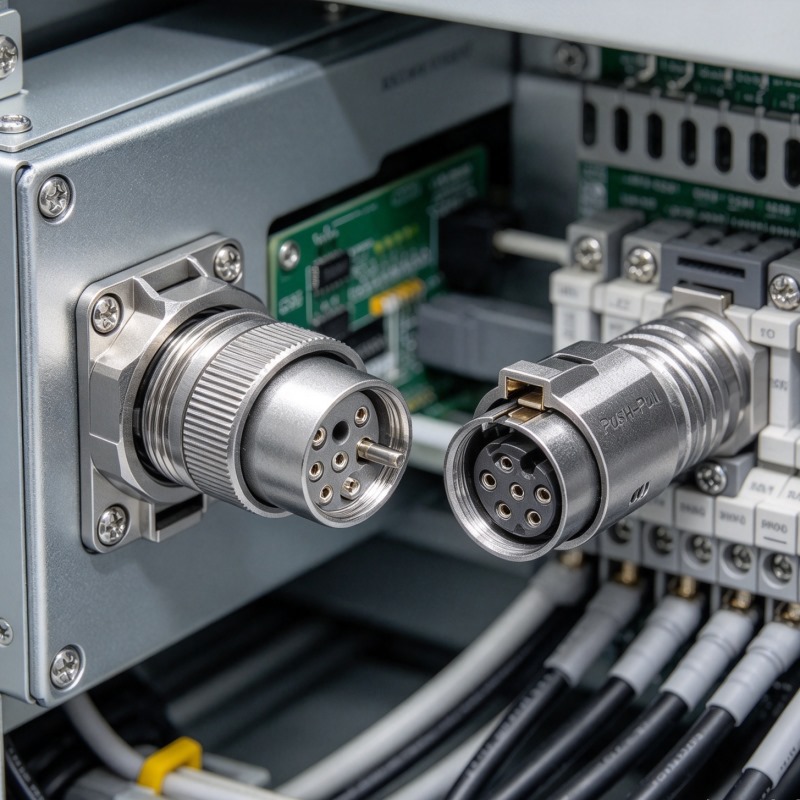
The connection method is one of the key features of the PBH series. Instead of relying on a threaded nut or another rotating fastening structure, the remote plug socket uses a push-pull method for connection and separation. The plug can be pushed into the corresponding socket to establish the connection and then pulled to separate it when the equipment needs to be serviced or rearranged.
As a result, the push-pull design can make repeated connection operations more straightforward. This is particularly useful in equipment where connectors may need to be connected and disconnected during installation, inspection, or maintenance. Furthermore, the absence of a screw-tightening procedure can help simplify the physical operation of the connector and make the connection process more convenient for users.
The PBH series push-pull connector therefore focuses not only on electrical contact but also on the practical interaction between the plug and socket. By combining the push-pull mechanism with suitable contact materials, the connector can support applications where convenient connection and separation are important parts of equipment operation.
Why Contact Material Matters in AC/DC Connections
Contact material plays an important role in the interface between two electrical components. Whenever a plug and socket are connected, their contact pieces must establish a suitable conductive path for the circuit. Therefore, the surface material and plating used on the contact can influence the characteristics of the electrical interface and its suitability for different applications.
For the PBH1 model, the contact piece is silver-plated with a palladium alloy. Palladium alloys are commonly used in electrical contact applications because of their material characteristics and resistance to surface degradation. The silver-plated palladium alloy structure provides a specific contact material combination for applications requiring an electrical interface designed around this type of contact construction.
Meanwhile, PBH2 uses silver-plated contact pieces, while PBH3 uses gold-plated contact pieces. These different configurations give users more flexibility when selecting a connector according to the requirements of their equipment. Rather than treating every electrical connection application in the same way, the PBH series provides several contact plating options within the same product family.
Palladium Alloy and the PBH1 Contact Structure
The use of a palladium alloy in the PBH1 contact piece is particularly relevant to the article's focus on contact reliability. Electrical contacts operate at a small physical interface, so the characteristics of the contact surface can affect how the connection performs. By combining a palladium alloy with silver plating, the PBH1 configuration provides a contact structure intended for electrical connection applications involving AC and DC circuits.
However, contact material is only one part of overall connector performance. Correct mating between the plug and socket, suitable installation, and appropriate application conditions also influence how an electrical connection performs in actual equipment. Therefore, the palladium alloy contact should be considered together with the connector's push-pull structure and the requirements of the target application.
This integrated approach makes the PBH1 configuration suitable for users who are specifically considering contact material when selecting connectors for electrical equipment. At the same time, the availability of silver-plated and gold-plated alternatives means the PBH product family can address different contact material preferences without changing the basic push-pull connection concept.
Choosing the Right PBH Contact Configuration
Selecting a connector for an AC or DC application requires attention to both mechanical and electrical requirements. The contact material should match the intended application, while the connection mechanism should provide a practical experience for installation and maintenance. With PBH1, PBH2, and PBH3 offering different contact plating configurations, users can consider the characteristics of each option when determining which version fits their equipment.
For applications where palladium alloy contact construction is a key consideration, the PBH1 configuration provides a silver-plated palladium alloy contact piece. For other applications, PBH2 provides a silver-plated contact, while PBH3 uses a gold-plated contact. This variety gives equipment designers greater flexibility when integrating the connector into different electrical connection environments.
Airoadcon provides the PBH series for electrical connection applications involving both AC and DC circuits. With its push-pull connection and separation structure and multiple contact plating options, the product family offers a practical approach for equipment manufacturers and integrators looking for a connector that combines convenient operation with different contact material configurations.
A Practical Push-Pull Solution for Electrical Equipment
A connector needs to provide more than a basic electrical interface. Its contact construction, connection method, and ease of maintenance can all influence how effectively it integrates into equipment. The PBH series addresses these considerations through a push-pull plug socket design and several contact configurations, including the silver-plated palladium alloy contact used in PBH1.
Overall, the PBH series push-pull connector provides a practical connection approach for AC and DC electrical circuits while giving users flexibility in contact material selection. The push-pull structure makes connection and separation straightforward, while the different plating configurations allow the connector to be considered for applications with different contact requirements. Consequently, the PBH series can serve as a useful option for electrical equipment where convenient operation and appropriate contact construction are both important.