





<back
How Does Bayonet Quick Coupling Structure Affect Sealing Performance Under Vibration Conditions
In vibration environments, sealing systems are continuously subjected to alternating mechanical stress, which can gradually weaken interface compression and lead to micro-leakage. Over time, this dynamic loading condition affects both structural stability and sealing reliability. Therefore, connector design becomes a critical factor in ensuring long-term performance in aerospace and industrial systems where vibration is unavoidable. In particular, the locking mechanism must maintain consistent axial force to prevent seal displacement during continuous motion.
Mechanical Locking Stability and Structural Design
The core advantage of a bayonet quick coupling structure lies in its rotational locking mechanism, which allows fast engagement while maintaining strong mechanical retention. Unlike threaded systems, it distributes stress more evenly across the locking interface. Moreover, this uniform force distribution reduces localized deformation under vibration conditions. As a result, the sealing interface can maintain stable compression force even during long-term mechanical oscillation, which significantly improves system reliability.
Seal Material Behavior and Compression Retention
Under vibration stress, elastomer sealing materials may experience compression set, relaxation, or slight displacement. These micro-changes can gradually reduce sealing effectiveness if not properly controlled. However, optimized groove design and stable preload control help maintain consistent seal positioning. In addition, high-precision machining ensures that sealing components remain tightly engaged within the interface, reducing the risk of leakage during long-term operation.
Aerospace Standard Compliance and System Compatibility
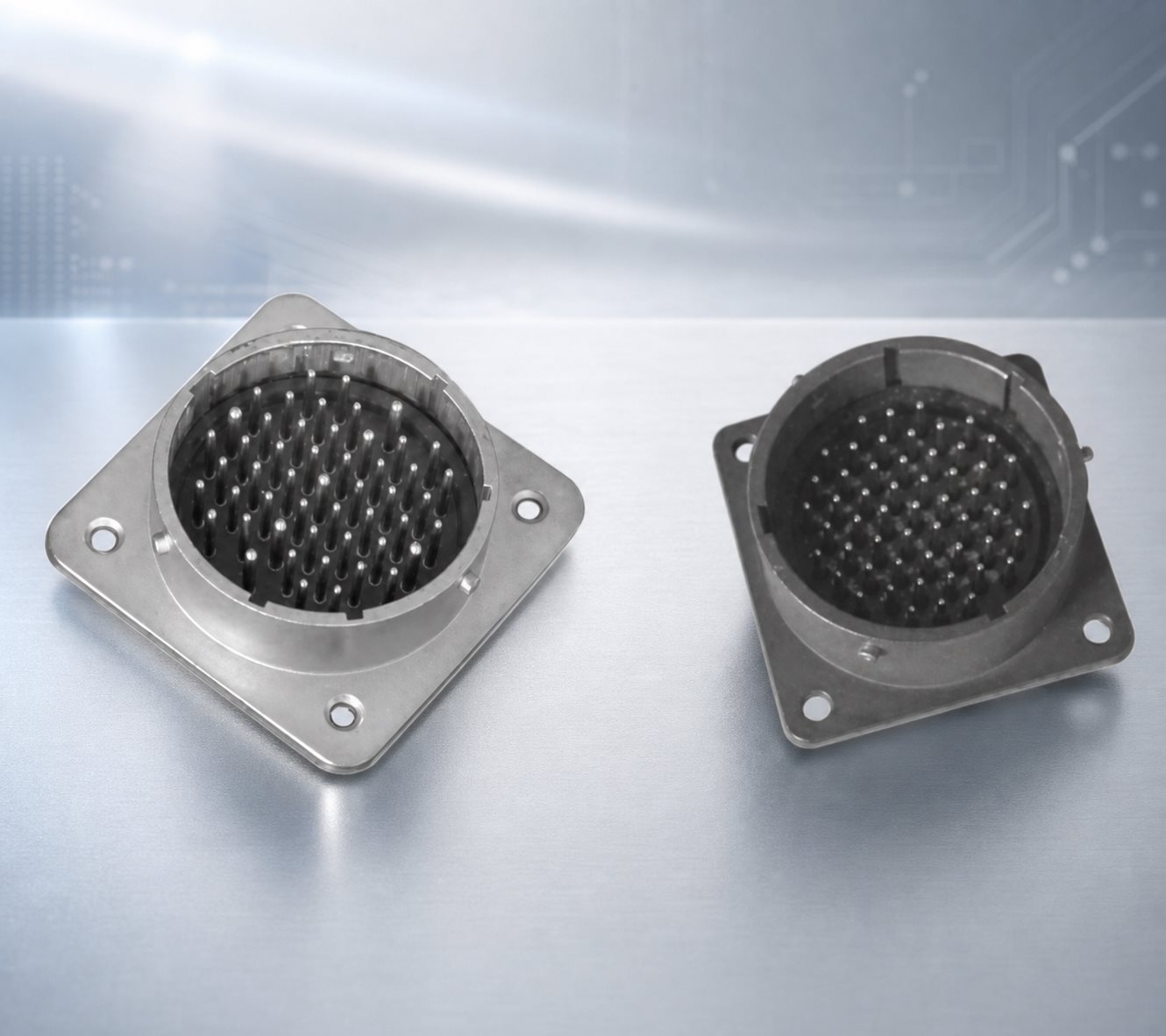
This product series is designed to meet American industrial standards and complies with MIL-C-26482G and HB6-77-83 specifications. Furthermore, it supports interchangeability with ZH8525 series connectors that share the same shell size and contact arrangement. The system includes K-type crimp contacts and KF-type solder contacts, enabling flexible electrical connection methods for different application requirements. Therefore, it is widely used in aircraft electrical systems, radio equipment, and other high-reliability aerospace applications where vibration resistance is essential.
Fatigue Resistance and Long-Term Reliability
Repeated vibration cycles can cause wear at the locking interface, especially in high-frequency mechanical environments. However, optimized cam geometry and reinforced engagement surfaces significantly improve fatigue resistance. In addition, surface treatment technologies reduce friction and enhance hardness, which helps extend service life. As a result, the system maintains stable locking force and consistent sealing performance even under prolonged operational stress.
Industrial Integration and Engineering Applications
In complex electrical and fluid systems, sealing reliability must be maintained across multiple connection points. Therefore, uniform locking force distribution is essential for ensuring overall system stability. The bayonet quick coupling structure provides a balanced combination of fast installation, secure locking, and stable sealing performance. Moreover, Airoadcon integrates advanced structural engineering to ensure compatibility with high-density layouts and demanding vibration environments.
Conclusion
In conclusion, vibration introduces continuous mechanical stress that can compromise sealing systems if not properly managed. However, through optimized locking geometry, stable preload control, and standardized structural design, the bayonet quick coupling structure effectively maintains sealing integrity under dynamic conditions. With compliance to MIL-C-26482G and HB6-77-83 standards and compatibility with ZH8525 series connectors, it delivers reliable performance in aerospace electrical systems, radio equipment, and other high-vibration industrial applications.