






<back
How Do Military Style Aviation Connectors Support High-Speed Data Transmission?
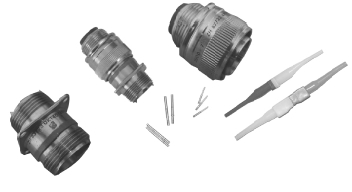
In modern aerospace, defense, and industrial systems, data integrity and speed are critical. High-performance communication networks require connectors that can reliably transmit signals under extreme conditions. A military style aviation connector provides the durability, shielding, and precision necessary to maintain high-speed data transmission in demanding environments.
These connectors are designed to ensure that electronic systems, from avionics to unmanned vehicles, operate efficiently without data loss or interference.
Robust Design for Signal Integrity
A key factor in high-speed data transmission is signal integrity. Military style aviation connectors are engineered with precise contact alignments and robust insulation materials. This design minimizes signal degradation, crosstalk, and electromagnetic interference. Consequently, electronic devices maintain consistent performance even in high-vibration or high-temperature environments.
Additionally, the high-quality materials and gold-plated contacts reduce contact resistance, which is crucial for preserving high-frequency signals. This ensures that communication systems operate reliably across a wide range of aerospace and defense applications.
Advanced Shielding Capabilities
Electromagnetic interference (EMI) can disrupt data transmission, particularly in complex electronic systems. Therefore, military style aviation connectors incorporate advanced shielding techniques to protect signal lines. These shields prevent unwanted electromagnetic noise from affecting data flow, allowing high-speed signals to transmit accurately over long distances.
Furthermore, the connectors’ rugged housings provide mechanical protection, which is equally important for maintaining uninterrupted communication in harsh environments. This combination of electrical shielding and mechanical resilience supports mission-critical applications where reliability is non-negotiable.
Versatile Applications Across Systems
These connectors are not limited to a single type of system. They are widely used in avionics, unmanned aerial vehicles (UAVs), military vehicles, and industrial automation. In each case, high-speed data transmission is essential for navigation, control, telemetry, and real-time decision-making.
By using military style aviation connectors, engineers ensure that sensitive electronic signals reach their destination without delay or degradation. This capability enhances operational efficiency and contributes to overall system reliability.
Supporting Extreme Environmental Conditions
Harsh environmental conditions, such as temperature extremes, moisture, vibration, and dust, can compromise standard connectors. In contrast, military style aviation connectors are designed to withstand these challenges. Their durable construction allows consistent high-speed data transmission, even under heavy mechanical stress or adverse weather conditions.
This durability reduces the likelihood of system failures and lowers maintenance costs while providing stable performance over the connector’s lifespan.
Integration with Modern Communication Protocols
Modern communication protocols, including high-frequency digital signals and fiber-optic interfaces, demand connectors that can handle high bandwidth and rapid data exchange. Military style aviation connectors are compatible with these protocols and offer scalability for future upgrades. As a result, systems can support increasing data loads without requiring frequent connector replacement or redesign.
Conclusion
In summary, military style aviation connectors support high-speed data transmission through precision engineering, robust shielding, and high-quality materials. They maintain signal integrity, prevent interference, and ensure reliable performance under extreme conditions. Connector provides advanced military-grade solutions that meet the rigorous demands of aerospace, defense, and industrial applications. By integrating these connectors, engineers can ensure that their systems achieve optimal data performance, durability, and operational reliability.